

OpenAPI Support in Zuplo
Zuplo natively supports the OpenAPI 3.1 (and is compatible with 3.0) specification standard as the core way to configure the gateway.
When you create a new project you will see a routes.oas.json file. This is
your default OpenAPI routing file. The file extension .oas.json indicates that
this is an OpenAPI document used for routing.
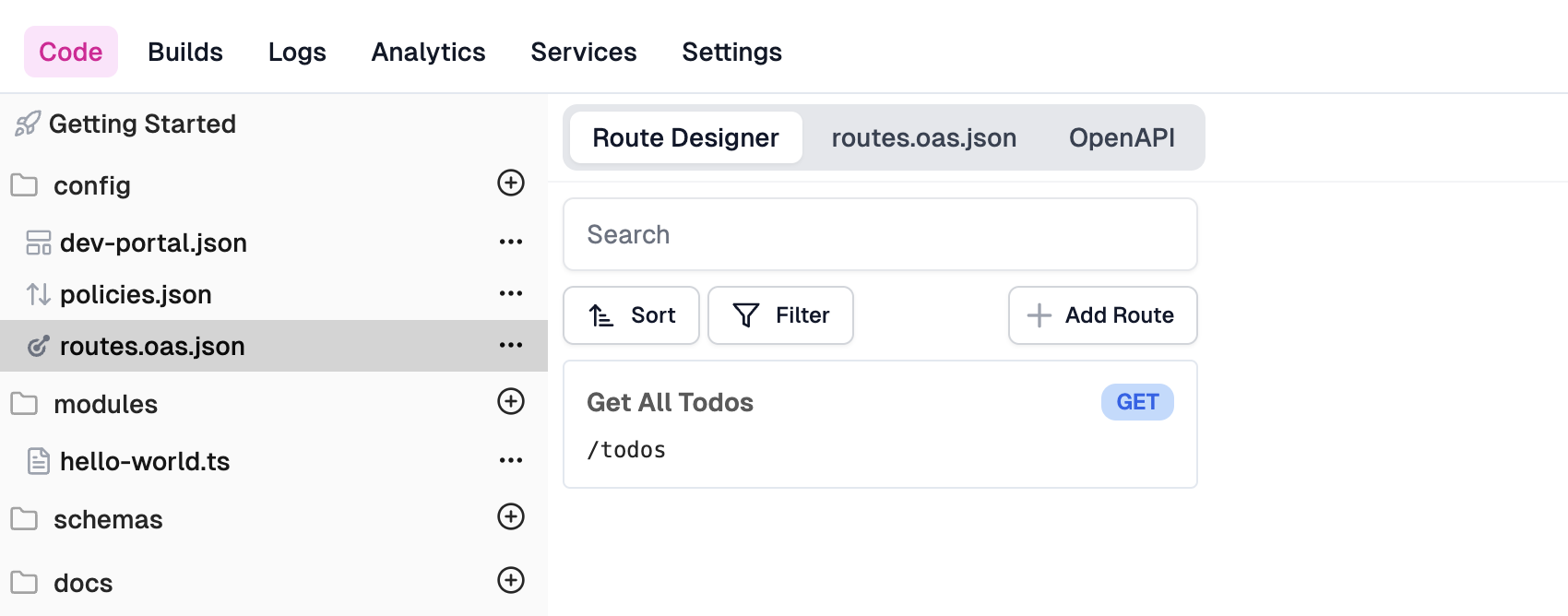
You can use the Route Designer to build your routes, which will be creating an OpenAPI document in the background for you (check it out in the JSON View).
You can also import an OpenAPI document by clicking the Open API tab.
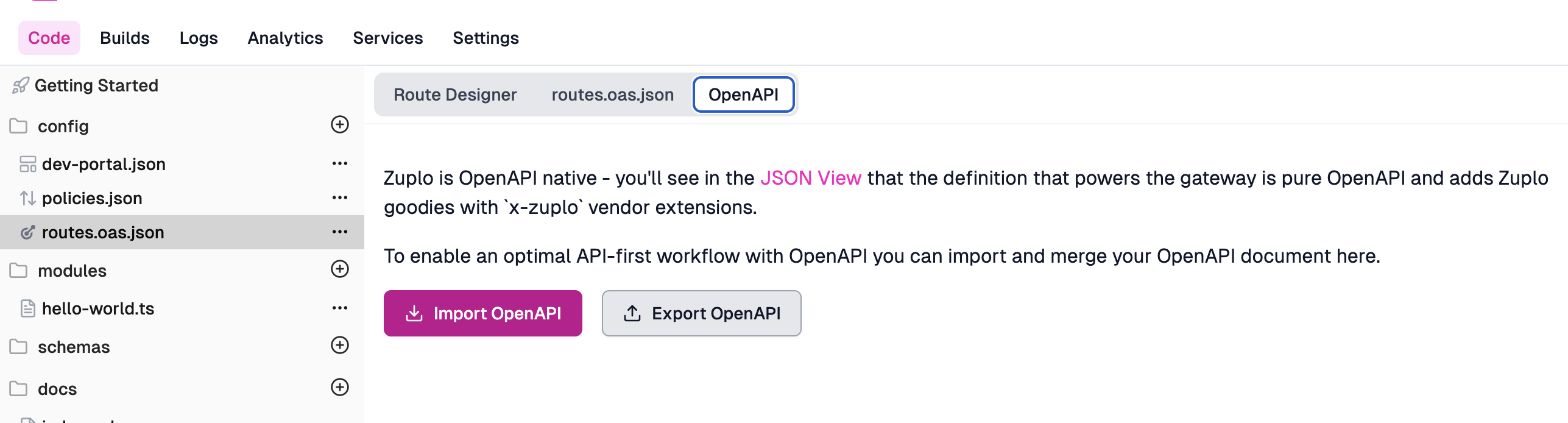
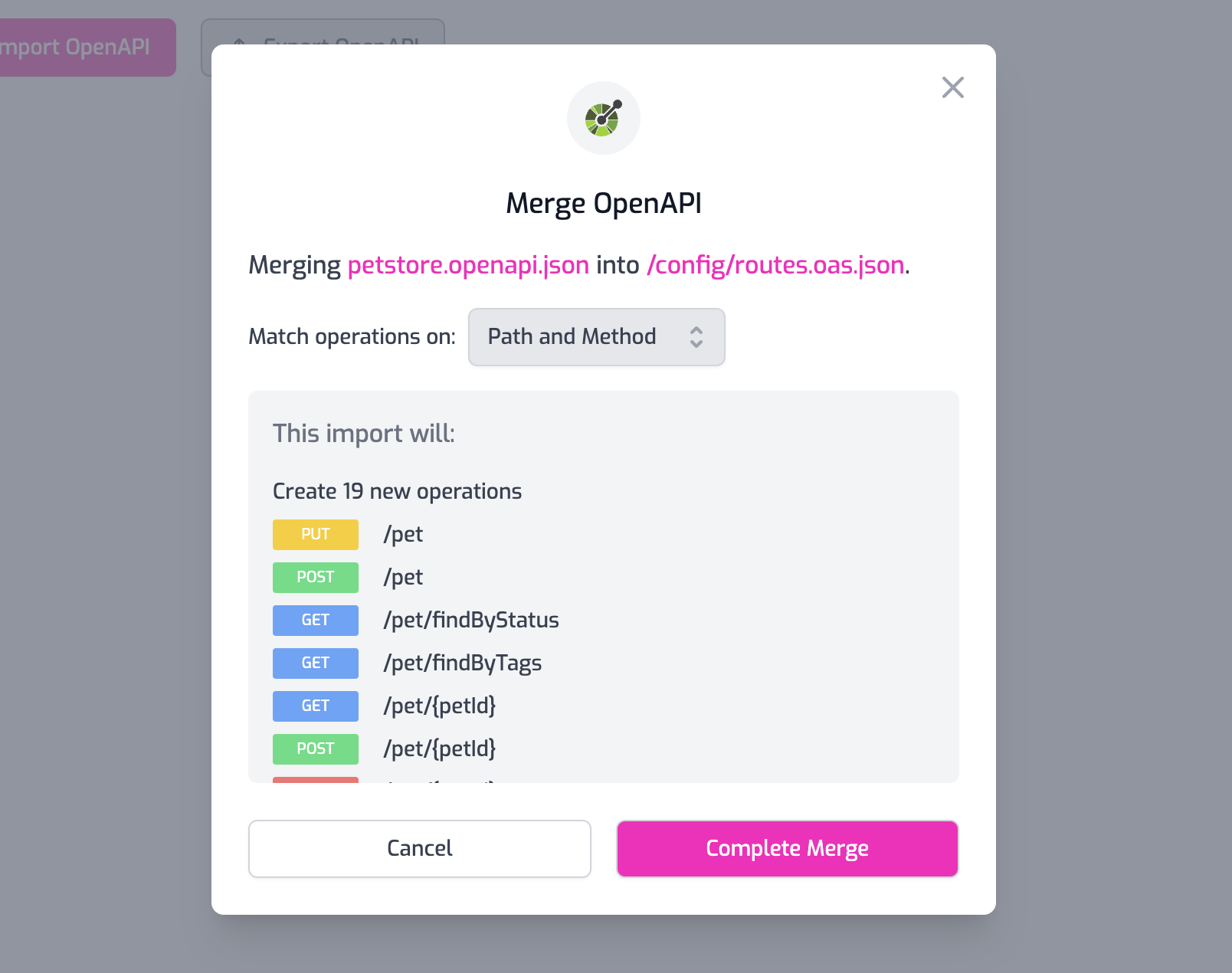
This will merge your imported file with any routes you already have in your
.oas.json file. By default, operations will be merged by path & method - but you
can choose to merge on operationId instead if you prefer.
OpenAPI Workflow
Having a source of truth when embracing design-first and OpenAPI is critical. Zuplo offers the best workflow for OpenAPI friendly businesses because its support for OpenAPI is native.
You can start your OpenAPI document in Zuplo and export that to other sources, or you can generate your OpenAPI elsewhere (by hand, using stoplight.io, etc.) and sync your changes into Zuplo using our import feature.
The import feature will merge changes from an external source-of-truth OpenAPI document and will keep your Zuplo settings intact, while overwriting everything else from your imported OpenAPI docs. This creates a great workflow, whatever toolset you use.
What's more, you can now have more confidence that your OpenAPI represents the truth of your API implementation - because it now drives the configuration of your gateway.
Zuplo extensions
Zuplo extends the OpenAPI spec using vendor extensions. You will see two vendor extensions:
x-zuplo-path
x-zuplo-path is used to specify the type of
path matching mode you want to use; open-api is the default
and uses the standard OpenAPI slugs for tokens (for example /pizza/{size}).
You can change the pathMode to url-pattern to use the web standards
URLPattern
approach to path matching which is much more powerful and supports regular
expressions.
This extension is defined below the path property:
Code
x-zuplo-route
x-zuplo-route is where all of your route settings are configured, including
policies, handlers,
CORS and more.
This extension is defined inside the operation, below the method:
Code
Other Supported Extensions
Zuplo also supports other popular extensions in order to better integrate with your existing tooling.
x-internal
Code
You can set this property to true in order to hide a route from the Developer
Portal. If you are using the OpenAPI Spec Handler,
internal routes won't be present in the generated OpenAPI file.
Multiple File Support
You can have multiple .oas.json files if you wish to break up your route
definitions. Note that routes will be executed in document order, based on the
.oas.json files being sorted alphabetically. For more details see
routing.